Energy security starts with margin security
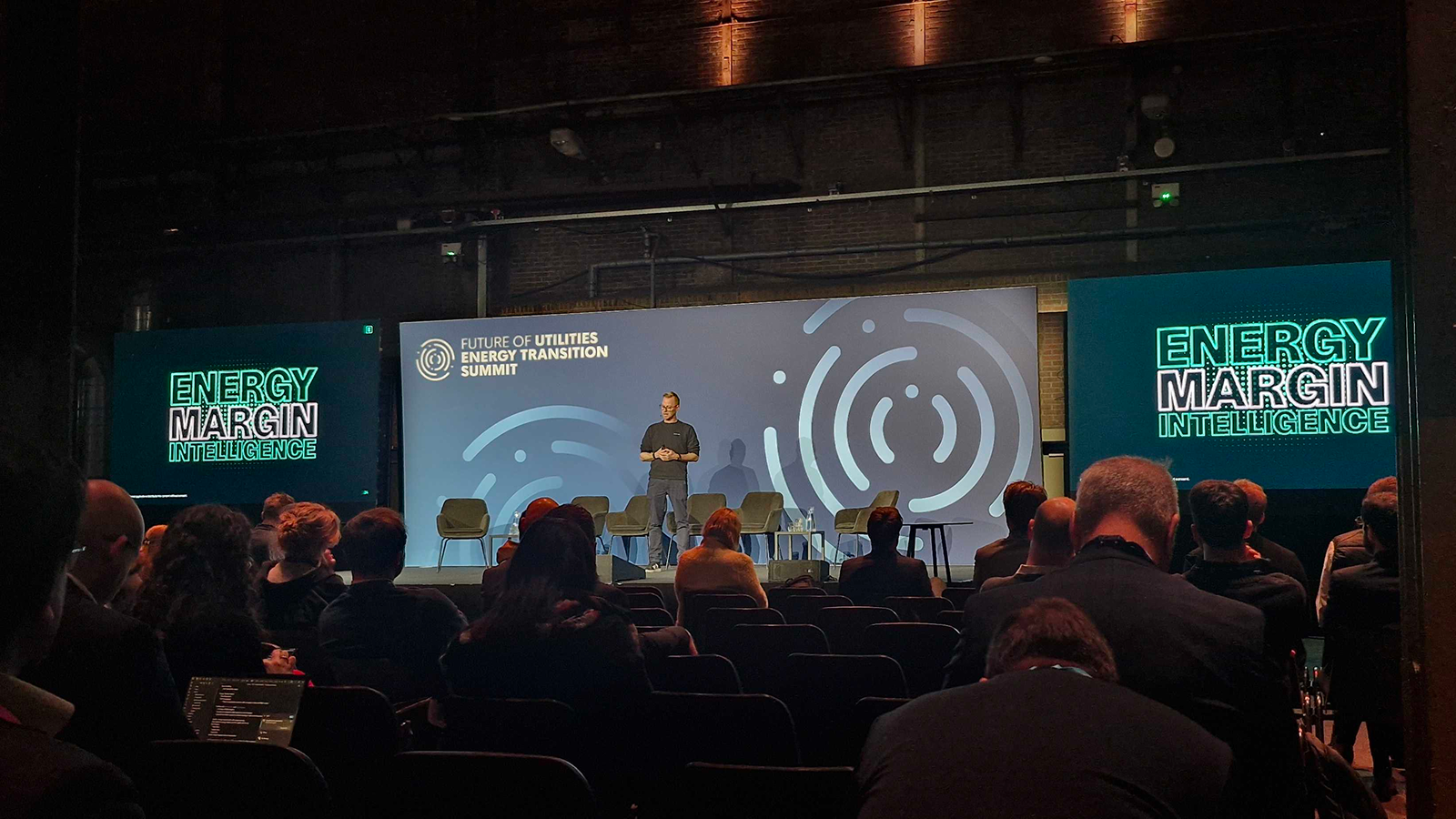
Last week, Gorilla CEO Ruben Van den Bossche took to the stage at the Future of Utilities: Energy Transition Summit in Amsterdam. His keynote on margin security covered the state of the energy transition, what it actually demands from retailers, and why the industry's margin problem is more urgent than ever.
If you weren't able to make it to Amsterdam, or just want to refresh your memory, here are the biggest takeaways.
The new normal isn't going away
Ruben opened by reflecting on the last six years. Covid. The first energy crisis. The AI boom and the data centre load that came with it. The shifting geopolitical landscape of 2025. And now, a second energy crisis already underway.
Each of these events, taken alone, was treated as a once-in-a-generation shock. Together, they've become something else: the environment energy companies now have to operate in permanently. The question Ruben put to the room was a simple one. How do you build and run an energy business in conditions like these?
His answer wasn't to wait for things to settle down. The energy transition doesn't pause because the backdrop is difficult.
Three drivers, one direction
There's a tendency in political debate to frame the goals of the energy transition as competing priorities. Energy security versus climate action. Affordability versus decarbonisation. Ruben pushed back on that framing.
Whether the goal is reducing global warming, cutting energy costs for consumers and businesses, or ending dependence on foreign fossil fuels, the answer points in the same direction: faster, larger investment in local clean energy, storage, flexibility, and grid infrastructure. The drivers might differ but the destination doesn't.
Two shifts reshaping energy retail
The bulk of Ruben's keynote focused on what the energy transition actually means for retailers, and the two structural shifts it's forcing.
The first is a move from portfolio-level to customer-level margin management. For years, profitability was assessed at an aggregated level and reviewed after the fact. That's no longer good enough. Winning retailers are now modelling and steering margin at individual contract level, in real time, before and during decisions. Ruben made the point with a simple example: in 2018, B2B retailers published monthly price books. Today, Gorilla's customers are updating ten times a day.
The second shift is from siloed operations to integrated services. As retailers expand into PPAs, storage, and flexibility, the old model of separate teams running on separate data and separate logic is breaking down. The retailers that will come out ahead are those that align pricing, forecasting, and risk on a single shared margin model, and manage supply, PPAs, storage, and flexibility as one integrated economic system.
The margin problem hiding in plain sight
Ruben introduced the concept of the Margin Iceberg. On the surface, quotes look fine, forecasts look solid, hedges look covered. But beneath the waterline, margin is quietly disappearing. Disconnected systems, siloed teams, and mismatched assumptions are eroding profitability across the entire sales-to-cash journey, often invisibly, and often before anyone has a chance to act.
The numbers are stark. One in three B2B deals ends up loss-making. Between 2-3% of gross margin is being silently eroded every year. And operational overhead alone puts a further 2% to 5% of net margin at risk. These aren't edge cases. For retailers operating on already thin margins, they represent a structural threat to the business.
The root cause is data entropy. Energy companies have invested heavily in operational systems over the years, but every integration, every export, every spreadsheet adds a little more disorder. Over time, data becomes fragmented, inconsistent, and hard to trust. Commercial decisions slow down. Pricing diverges from forecasting. Billing diverges from both. And by the time the loss surfaces, the contract has already run for months.
This was a point reflected in our Data Rangers' experiences on the floor. For one company, three people all had a different view of how much margin they made last year - and none of them agreed.
Risk premiums were another point that came up time and again. Without margin visibility, retailers are forced to add in a risk premium to every offer they make in order to protect themselves. It's rational, but that premium is also the reason quotes are less competitive than they could be. From our conversations, the teams which price more aggressively are not taking greater risks. Instead, they have better margin visibility.
Seeing, steering, protecting, and growing margin
The closing argument was straightforward. Energy security, at a system level, depends on the commercial viability of the companies delivering the transition. And commercial viability starts with margin control.
Gorilla's Energy Margin Intelligence platform is built around exactly that challenge: connecting pricing, forecasting, hedging, billing, and finance logic into a single hub so that retailers can see, steer, protect, and grow their margin across every contract, every customer, and every decision.
The question Ruben left the room with: are you confident you can build products and bring them to market in today's volatility, knowing you'll make margin on them?
If that question lands, it might be worth taking a closer look at what Gorilla's EMI platform can do for your business.
Read further

Why community matters more than ever

AI is changing the trade-off between speed and configurability in energy retail