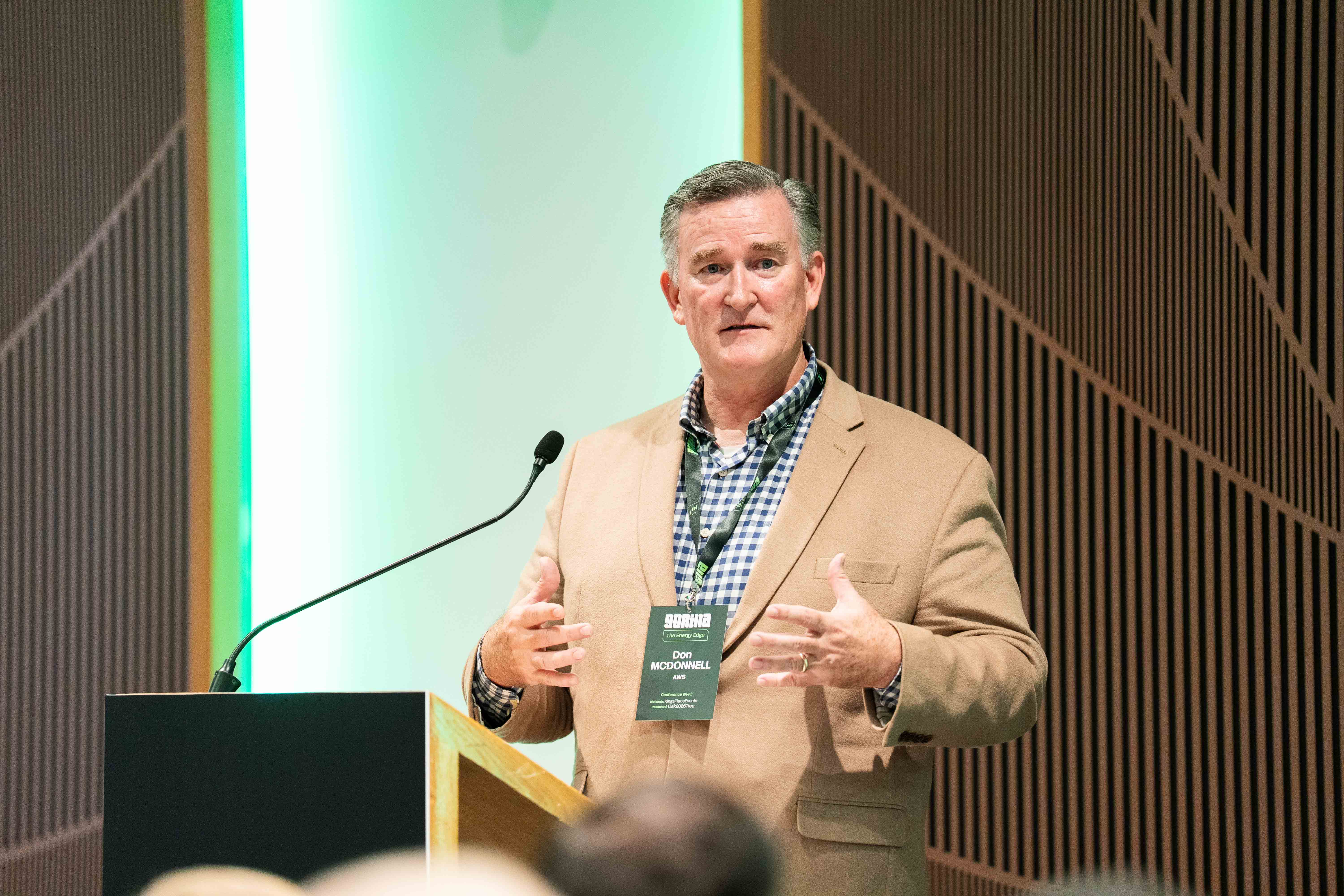
AWS’s Don McDonnell opened The Energy Edge with a story from 2000. Across the boardroom table sat Enron’s venture investors, and his management team decided they weren’t the right partner and turned the money down. When Enron went bankrupt, a receivable owed by one of its subsidiaries went to zero anyway, costing his company around a million pounds.
His lesson: “The biggest decisions you’re ever going to make are investment decisions, and every investment decision is underneath a trust decision.” Increasingly, Don argued, that includes which systems you allow to act on your behalf.
This theme ran through the whole morning at Kings Place on 17 November. Our host and Gorilla Data Ranger Harry Wheeler framed the agenda in three steps: understanding margin, acting on it and governing it, with AI and a human in the loop. These five ideas stood out.
1. AI is moving from the front of house to the kitchen
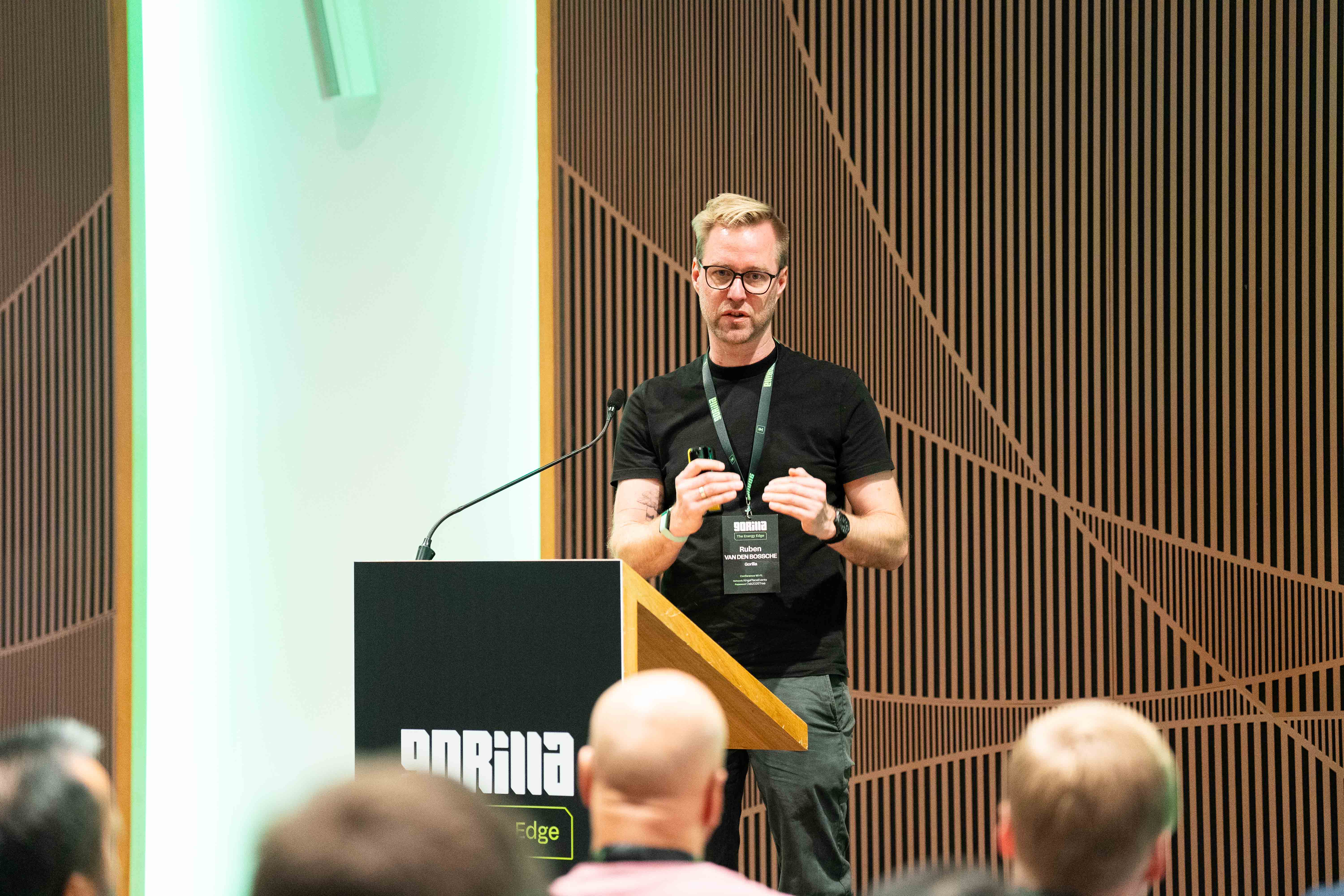
Gorilla CEO Ruben Van den Bossche opened with a clip from The Founder. In 1948, the McDonald brothers cut staff, changed how they charged and trimmed the menu. But Ruben argued the change that made McDonald’s was reimagining how the kitchen worked.
He used it to separate two kinds of change. Most AI in energy retail today goes after the first: customer support, operations and back-office processes, doing more with the same people or the same with fewer. Forecasting, pricing, hedging and settlement get left alone because the kitchen works: “You’re serving food every day and people seem to like it, or at least they eat it.” The catch is that every competitor is making the same front-of-house moves, so any advantage is “maybe a one- or two-year head start, not ten years”.
There’s a reason AI landed there first. Large language models learned from text, so they went where the words are. As recently as last year, a frontier model couldn’t solve 5.9 = x + 5.11, because as text ‘5.11’ looks bigger than ‘5.9’. “That’s why nobody trusted these models near their kitchen,” Ruben said. “You’re going to get food poisoning if you do.” Within 12 months, models went from scoring roughly zero on FrontierMath, a benchmark of problems that take professional mathematicians days to solve, to going past it. Forecasting, pricing, hedging and settlement are numbers work, and for the first time AI can do it.
Don described what that looks like in practice: “We’ve moved from assistants that suggest, to autonomous agents that do.” An agent reasons over live market, weather and portfolio data, calls your pricing engines and trading systems through open standards such as the Model Context Protocol (MCP), and acts within the guardrails you set.
2. Margin seen late is margin already lost
Don built his keynote on Gorilla’s Energy Margin Intelligence Index 2026, a survey of 600 energy executives across Europe. More than 90 per cent said they know their margins. Yet 74 per cent said siloed teams block them from optimising margin, and they estimate 6–10 per cent of annual revenue is at risk from poor margin visibility and slow decisions.
“You believe you can see your margin,” Don said. “The reality is you’re seeing it late, in fragments, through disconnected systems.” His thesis for the day: “Margin seen late is likely margin already lost.”
Ruben showed where the delay comes from. Every team that touches a B2B contract between the quote and the settled margin keeps its own reports and its own version of margin. When he asked Gorilla’s energy experts how many definitions of margin they thought existed, he joked 17. They told him at least 65, across five different axes. Traditional companies report up and decide down, so the full picture only comes together “at the end of the month, the end of the year, or the end of a 17-month settlement period”. An AI-native retailer needs one central view of margin, cost, volume, risk, prices and revenue that every team works from.
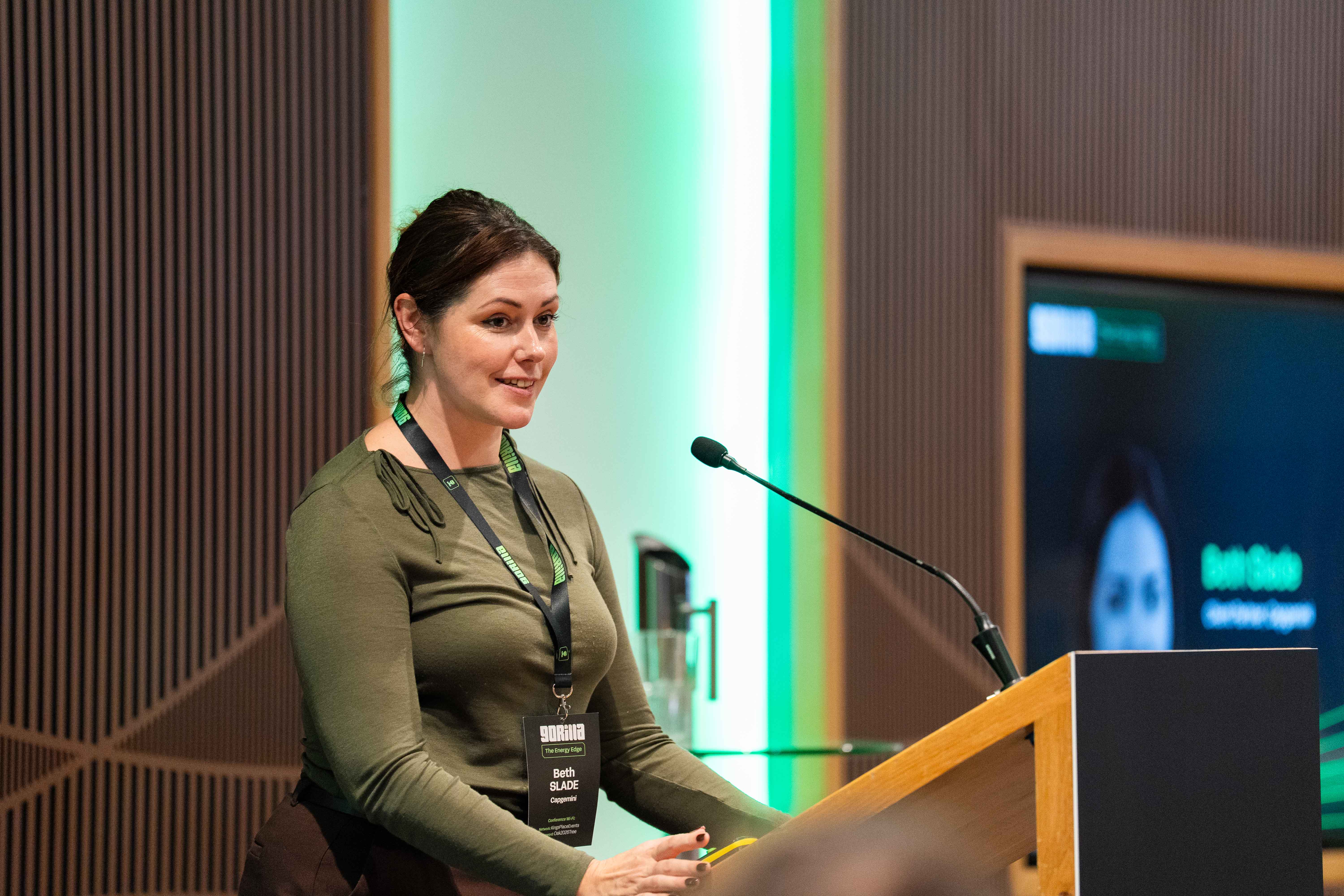
Beth Slade, Client Partner at Capgemini, named the same root cause: data that “is still disparate and sits across multiple platforms,” in a market that is experiencing constant volatility.
Fixing it pays. Don shared Gorilla’s work with a UK retailer, where a pricebook process that took 10–14 days now runs in under four hours: a 95 per cent reduction in pricebook creation time, a 75 per cent drop in pricing errors and, for the first time, the ability to respond intraday.
3. The model is no longer the hard part
Don made the point first and Ruben picked it up: “The model, as Don said, is no longer the hard part. The context is.”
For Don, the models are good. The difficulty is getting from proof of concept into production with management’s trust. One of his examples, Clearwater Analytics, runs more than 800 specialised agents and boils its hard-won lesson down to ‘context is king’. Neil Procter, Technical Director and Chief Architect at Inardua, called context ‘absolutely key’, along with predictable output: “You don’t want AI sending a differently formatted bill to every single customer.” Beth said the most attractive opportunities are “where industry context matters the most”, in complex documents, decisions, workflows and regulation.
Ruben took the idea to forecasting. Generic time-series foundation models, never trained on a retailer’s own data, are now outperforming custom-built forecasting models with half the error. “Your forecasting accuracy will no longer be a moat,” he said. What still matters is context: knowing your customers, your sites and what’s happening there.
The trouble is that in most retailers, that context was never labelled. Front-of-house processes come with hundreds of pages of CRM and CIS documentation. The kitchen, Ruben said, “lives on people’s desks, in inboxes, in spreadsheets, and a bit in Gorilla.”
His fix borrows from chefs: mise en place, where every ingredient is prepped, counted and labelled once before service starts. For a retailer, that means a consistent set of volume, cost and risk labels on every contract. Gorilla calls it the margin context layer, and Ruben was clear that better tools alone won’t do the job: “A sharper knife or a bigger pantry won’t cut it.”

4. For a regulated retailer, governance is the product
Energy is a regulated market, and every speaker treated governance as part of the design. Don put it most directly. At every step from wholesale to cash, “the agent only earns handoff by being governed with the right context, identity, and auditability… for a regulated energy retailer, that is the product.”
His three proof points came from financial services, where the stakes are at least as high. Moody’s, DTCC and Clearwater all took agents from proof of concept into production by solving identity, tool authorisation, observability and by providing an audit trail a risk officer can follow. “That’s where most pilots die; these three didn’t.”
Inardua’s renewal agent draws the line in the same place. A coordination agent in Salesforce enforces guardrails ‘where probabilistic AI needs structure, audit, and approval’. Pricing comes from the Gorilla platform, a salesperson approves every quote, and everything is written back with a full audit trail across Salesforce and Gorilla. Beth listed controls, auditability and human oversight as essentials for the use cases Capgemini prioritise: “That human-in-the-loop is super critical.”
Don’s rule of thumb: “Speed without trust is reckless; speed with trust is where we need to go.”
5. Agents are already working on margin
The morning’s partner sessions put agents to work on real margin problems, with each speaker clear about what is built and what comes next.
Inardua’s B2B renewal agent, part of its Verde framework, runs a renewal end to end. Salesforce spots a contract 90 days from renewal, and the agent asks the Gorilla platform what margin and cost stack the previous terms would give. The salesperson gets a curated alert in Slack and can ask follow-up questions in plain English, with the agent deciding whether to answer from Salesforce, Gorilla or both. The agent suggests a new price or margin point, the platform re-quotes, the salesperson approves in Slack and everything is written back to Salesforce. Inardua are building agents for complaints and debt on the same foundation.
Capgemini showed Penny, an intelligent pricing assistant that uses the Gorilla MCP server to compare B2B quotes at a cost-component level. Instead of flagging that two prices differ, Penny explains why, including any movement in margin. Penny also watches price curves continually, alerting pricing experts when a tolerance is breached and helping refresh the affected quotes. Capgemini estimate Penny saves about 25 per cent of a pricing expert’s time. As Beth put it: “Margin intelligence tells you what the margin is and where it is being made. Agentic intelligence then helps you act on that insight.”
For anyone yet to start, Don’s advice was to pick one margin leak, whether a price, a hedge or a reconciliation, and ‘put a single guarded agent on it this quarter’. Gorilla’s UK retailer customer did exactly that, starting with one product line before scaling across the portfolio. Don also suggested bringing agents in through systems people already know and trust, ‘like Gorilla’, so the change speeds up a familiar workflow instead of replacing it.
From what is happening to what to do
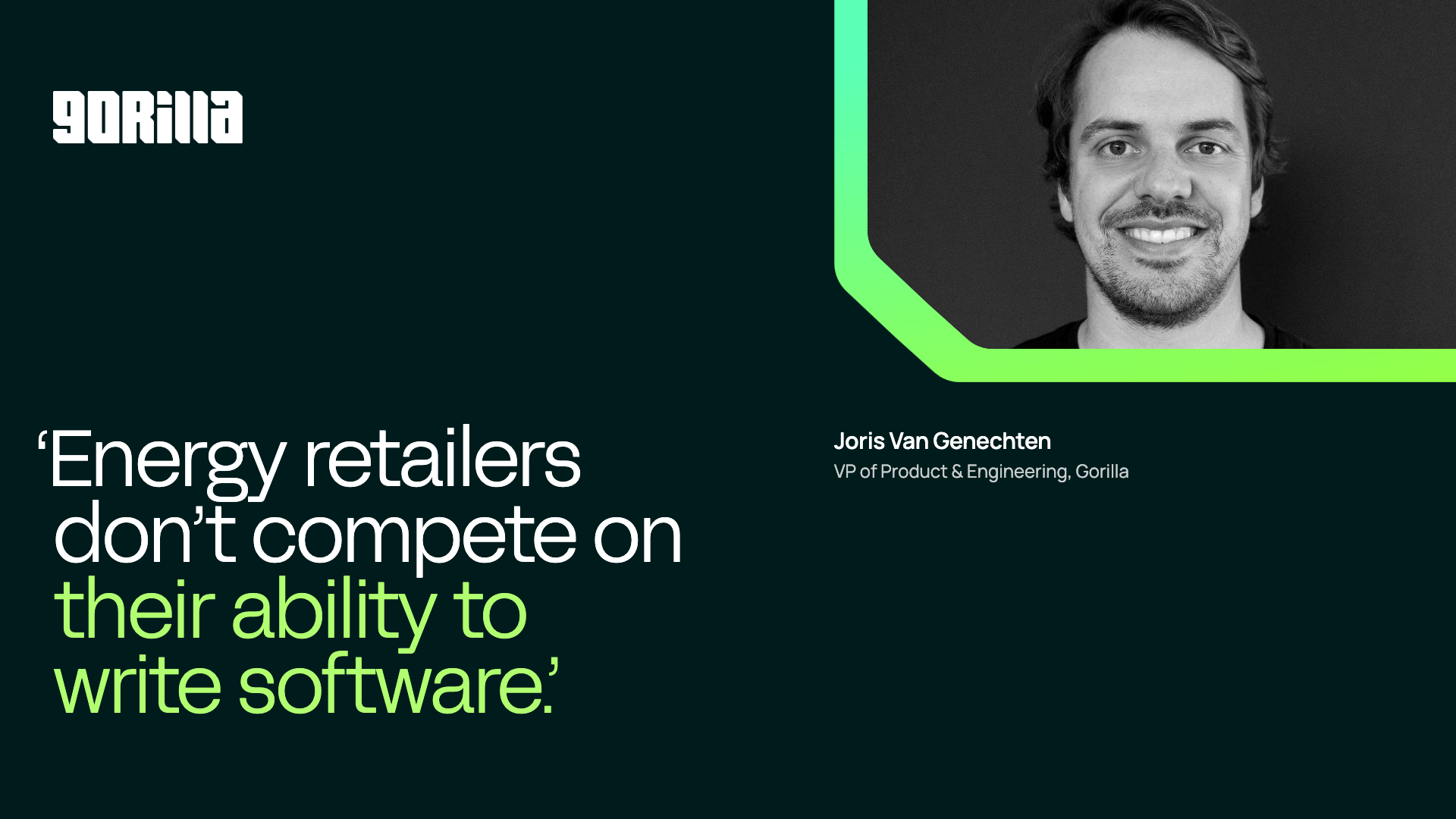
Gorilla’s VP Product & Engineering Joris Van Genechten closed the morning as he did in June, with three questions Gorilla can’t fully answer yet:
- What should we reprice this week, and by how much?
- Which renewals should Gorilla prepare before anyone asks?
- Which decisions are we ready to hand over, and which stay with people?
In June, the questions asked were what is happening. These ask what to do, and who or what should do it.
Ruben’s view is that the technology won’t be what holds retailers back: “I believe AI will be ready for your kitchen before you’re ready for AI in your kitchen.” He left the room with one more question. If you went to redraw your kitchen today, “would you draw it the way it works today, or would you make a change?”
Read further

AI agents will soon run on your margin model. Should you really build it yourself?

Margin is not a finance problem